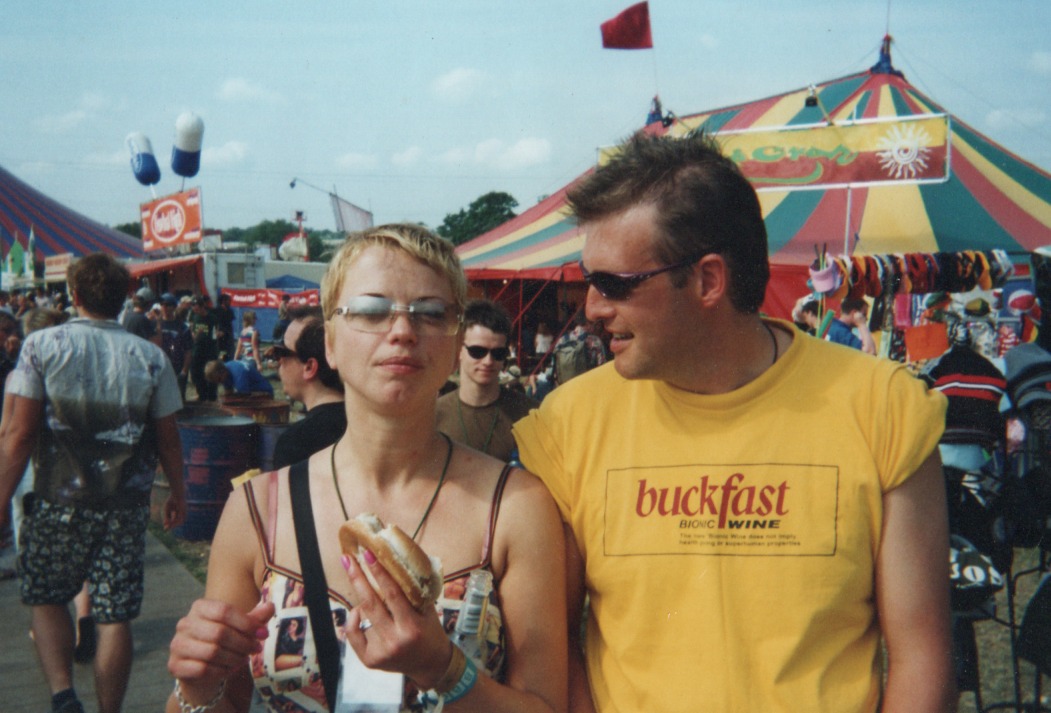
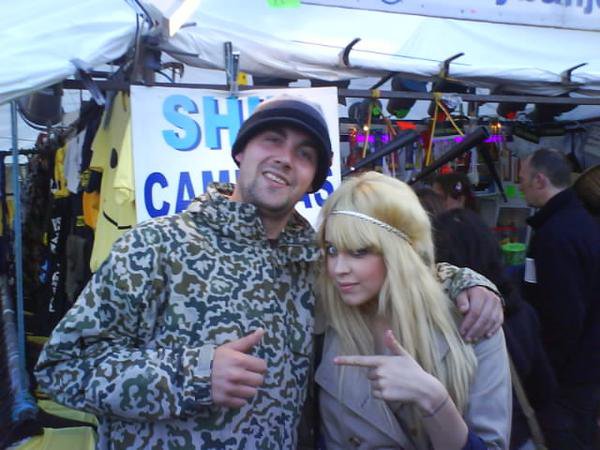
We started in 1997. The Dance Field was two years old — still finding its feet, still raw.
Twenty-one Glastonburys later, here’s what we remember.
1997: The first one
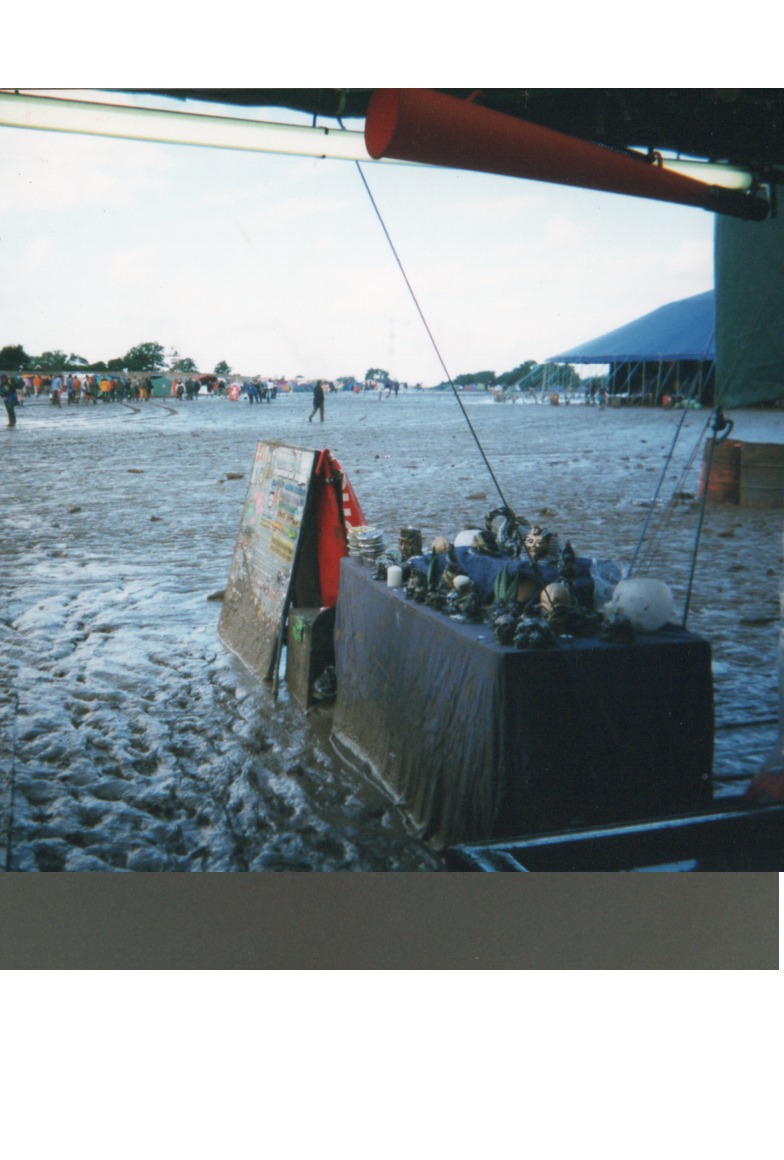
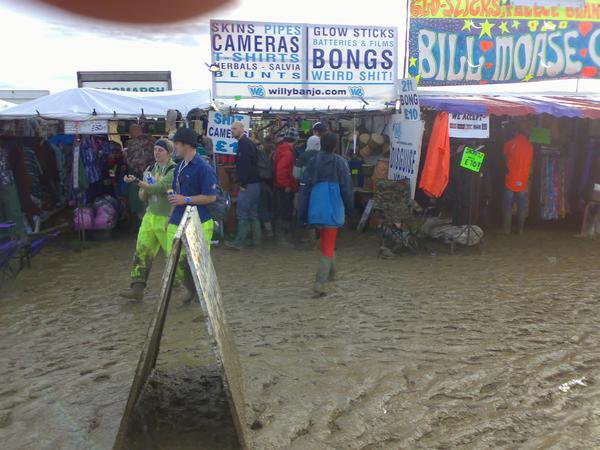
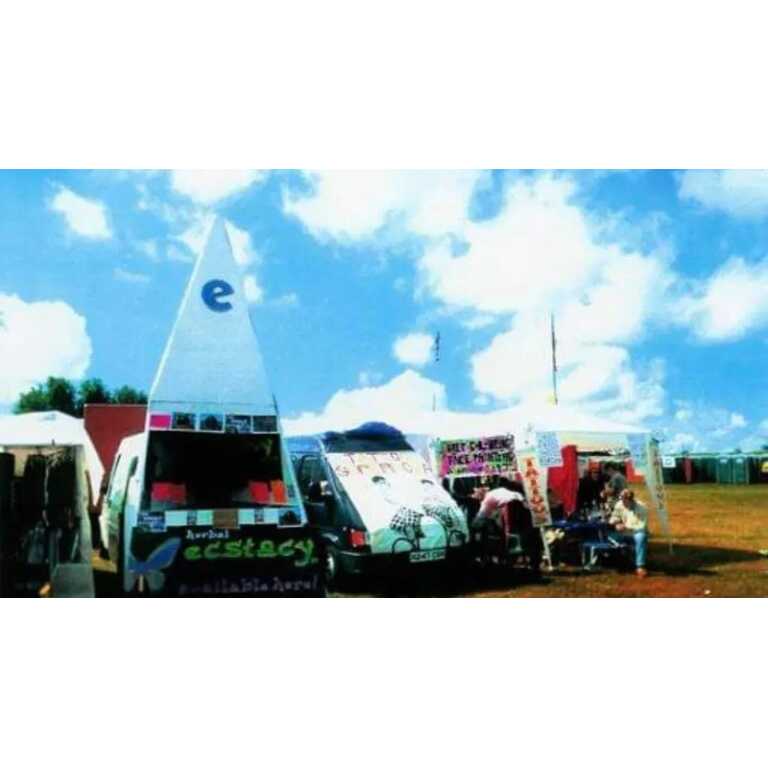
The view from the stall, 1997. The mud years. They were all mud years.
There were about seven of us. No tent between us. The conditions weren’t what you’d call conditions.
I had a Renault Clio. Last day of the festival I was trying to sleep in the front of it. Drank a load of Benylin to knock myself out. Didn’t work — not with a Clipper lighter vibrating up and down on the dashboard from the bass next door.
Daft Punk headlined the Dance Field that year, I think. Ronnie Size might have been on the bill too — he’d just won the Mercury Prize with New Forms. What I know for certain is that it was a complete mud bath. The organisers sent in the toilet-sucking machine to clear the mud from inside the tent. Only it didn’t suck. It blew. Raw sewage, all over the tent roof, all over the floor. The tent was shut for most of the day.
Our neighbours had a sound system and played psy-trance. Non-stop. Vol-au-vent, vol-au-vent, vol-au-vent — the same loop, all day, all night. We tried a different approach. Switch the system off. We managed it six times. They got banned after the festival.
Jimmy — who worked with us — had brought his jungle and drum and bass records. Asked if he could do a set. They asked what kind of music. He said drum and bass. That was the end of that conversation.
The ice cream van on site got busted that year too. Not just selling ice cream, as far as I remember.
The vans
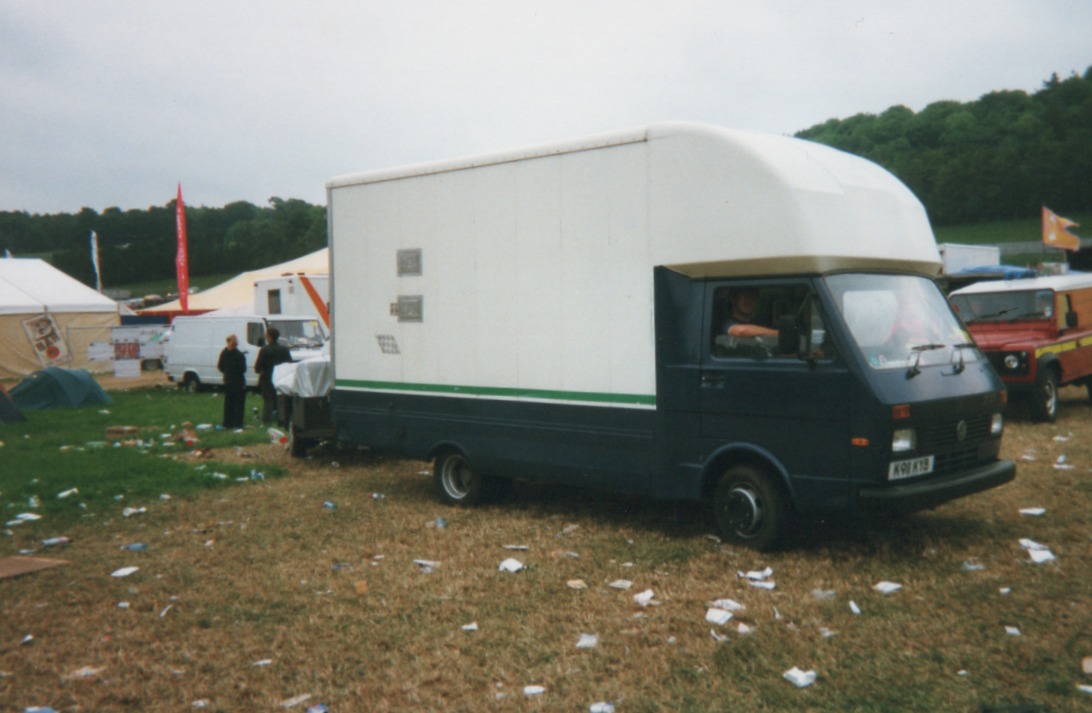
The VW. Beautiful thing. Built as a surf van — hammocks, the works.
The VW LT35 was enormous. It had been built as a surf van — hammocks inside, all sorts. One year we had a stowaway in the back. Two friends were visiting the festival; one got robbed and wanted to go home, but the other had his pockets full of kryptonite (if you follow) and couldn’t exactly walk through the gates. So a member of staff ended up in the back of the van, which is very much not legal. The van was also massively overloaded, which, being idiot market traders, we hadn’t really clocked.
We got pulled by the police on the way out. They interrogated us for quite some time before turning around and telling us we needed an operator’s licence for a vehicle over three and a half tons. I told the officer only him and Eddie Stobart’s dad knew them rules. Luckily, they saw the funny side. They let us off.
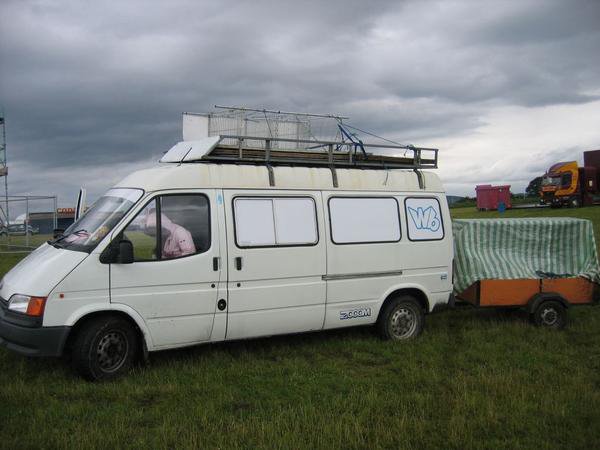
The Transit. We picked it up as an old minibus — just like something from Phoenix Knights. The moment I turned the ignition on, the cracked little red radio played Do You Know the Way to Amarillo. Driving down the M6. Perfect soundtrack. Used that van for years until it rotted away.
The people
The pitch was in the corner between the Dance Field and another stage. You could watch bands from the stall. It was one of the best spots on the whole site — and over twenty-one years, some memorable people came past.
The Transit. Turned the key. Cracked little radio played Amarillo. Used that van for years until it rotted away.
Big Bad Bob. An absolute one-off. Should have had a proper TV documentary made about him. RIP. There are many stories. None of them are for broadcast.
Sarah Cox — of considerable radio fame — came past the stall one year. She had, it’s fair to say, clearly had quite a big weekend. It was around the time she and Fat Boy Slim had got together. Good times.
Eggy Briggs and Peaches Geldof. Two people who made the festival what it was, and who are both greatly missed.
Eggy was working with us the year Peaches Geldof came past the stall with a camera crew. He clocked her first, leaned over and whispered: “Do you know who you look like? You look like Peaches Geldof.” She turned around in the poshest possible way and said: “That’d be amazing if I was a doppelganger of myself.” Then Eggy turned to me and went: “It is Peaches Geldof, isn’t it.” Of course it was. They got a photo taken and all was gravy.
Eggy died a couple of years later. He was twenty-five. Peaches went not long after. Both far too young. Big up the Briggs.
Big Bad Bob. RIP.
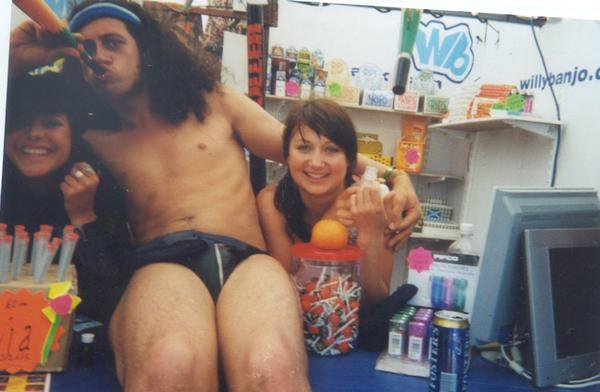
Matty turned up one year in leather Speedos with a zip down the front and got the girls to draw all over him in permanent marker. When we asked where his mates were — as you do, someone always needs finding at Glastonbury — he’d clearly lost them. Turned out he had mutual friends with a very large Manchester operation we happened to know well. Small world when you’ve been doing it long enough.
The stall
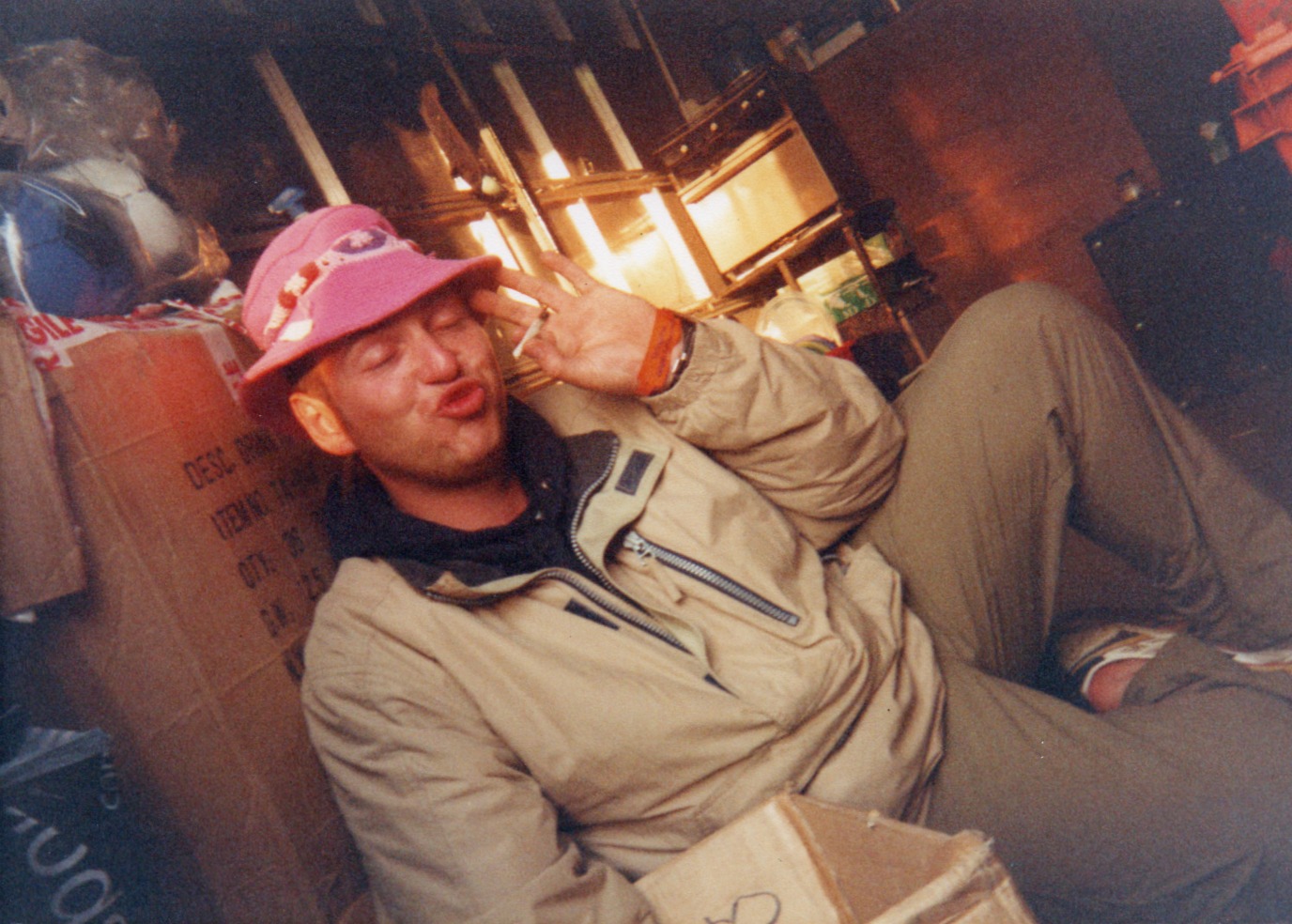
Sarah Cox. Of considerable radio fame. Clearly had quite a big weekend.Eggy and Peaches. Both far too young. Both greatly missed.Matty, Clair the Hair, and a young Anna. The crew.
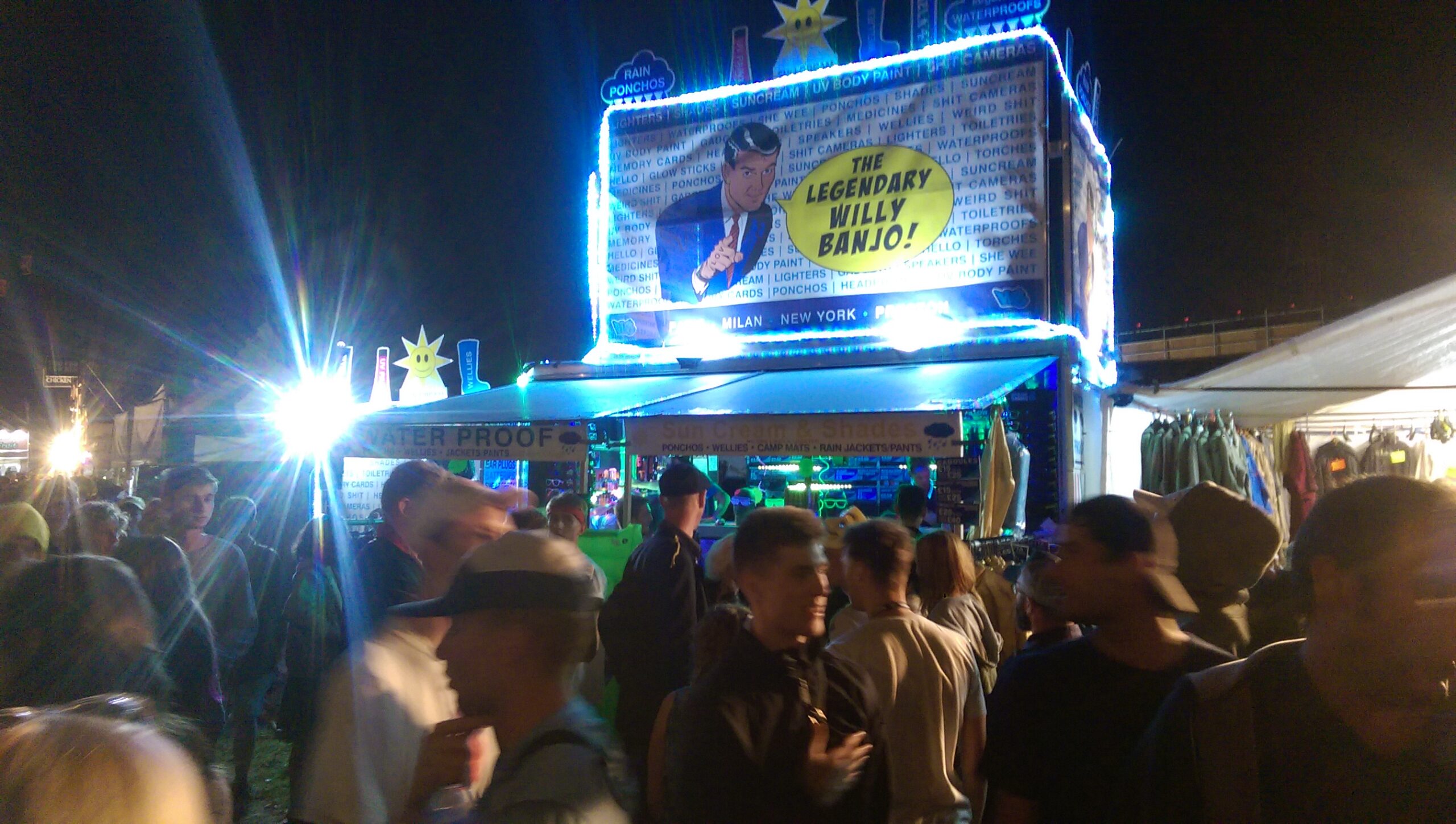
The stall evolved every year to match where we were. By the end we had signage, lighting, a proper setup — “The Legendary Willy Banjo. Paris. Milan. New York. Preston.” Because if you’re going to do it, do it properly.
Along the way we ended up in The Poke for best shops at Glastonbury, The Guardian for the stalls, and the News of the World for something about dodgy drug dealers being a damp disgrace at this year’s festival. That last one we took as a compliment.
The shit cameras
For the last five years or so, we were the shit cameras stall. Disposable cameras — the only option before camera phones arrived, then cheap and throwaway when digital took over, then almost gone, then back as vintage retro items worth actual money.
We sold them for a quid. Then a fiver. Then a tenner. Now we can’t buy them cheap enough to sell. Full circle — from the only camera available, to disposable throwaway, to sought-after analogue keepsake. It’s probably the most Glastonbury story we’ve got.
Silver Hayes
The Dance Field eventually became Silver Hayes. Better infrastructure, bigger stages, more organised. Phenomenal in its own right — but the early years, when it was raw and new and the sewage machine was blowing instead of sucking, had something that’s hard to replicate once things get properly managed.
Twenty-one times in that field. We’d go back for twenty-two.
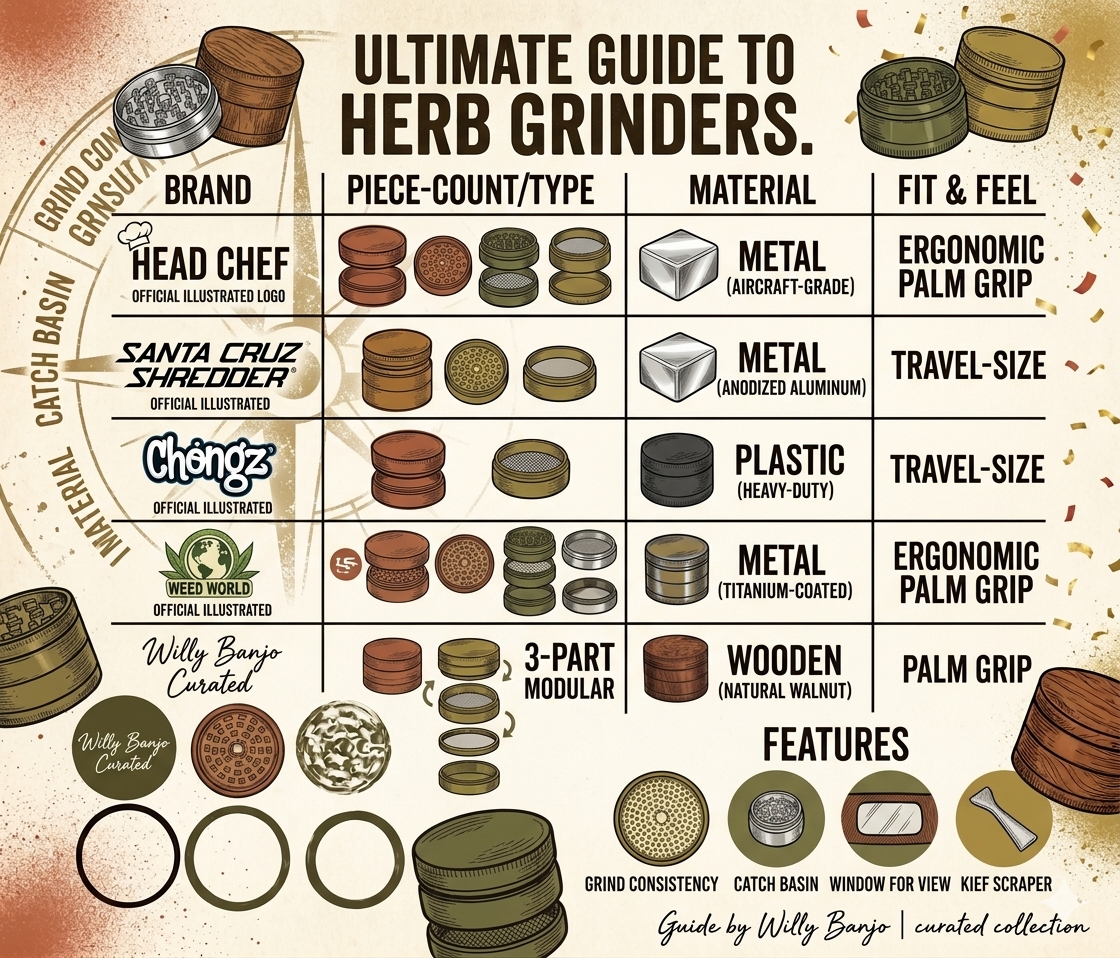
In the meantime, everything you’d have found at the stall is on the site — papers, tips, lighters and the rest — without the six-hour drive to Somerset.
Bring a second pair of wellies.
More from the archive
Eleven years of footage. Here’s the rest of it.
The last stall
Eventually we started making some proper money. Partly because we’d stopped partying quite as hard.
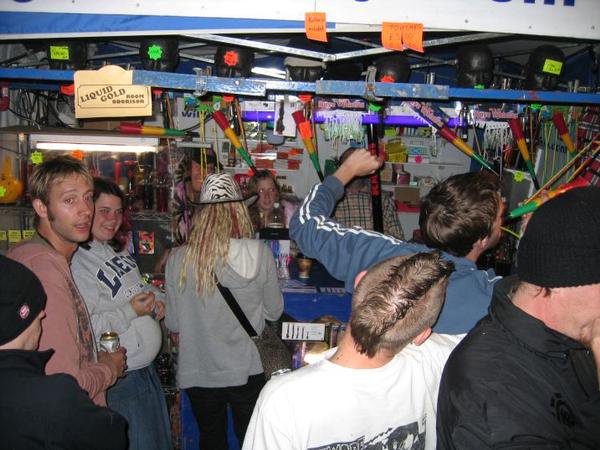
We put it into the stall. The pop-art graphics, the LED strips, the full illuminated signage. Built it specially for Glastonbury. Thursday nights in the Dance Field were absolute chaos — you could stay open when most of the field closed because you were basically running a market stall inside a nightclub. We loved it.
Glastonbury had other thoughts.
They wanted us on brand. A tribal tent, something boutique on the floor, whatever fitted the strategy that year. Didn’t matter if it made money. Didn’t matter that we’d been there twenty-one years and built something the customers actually liked. They wanted the look.
We got a letter. Dear Trader, your application has not been successful this time.
Twenty-one years. Everyone who came out with us gave everything to that festival. It wasn’t just another show — it was the one time a year when everyone who’d been in the game for decades ended up in the same field. You can’t put a number on that.
We tried other festivals. V was fine until it wasn’t. Boomtown put us in the wrong place, told us to take our signs down, and we lost money three times. None of them were Glastonbury.
The last few times we went, it wasn’t quite the same anyway. The chaos had gone. The freaks had gone. It’s become a very different kind of event — and that’s just the truth of it.
Twenty-one times in that field. We’d have gone back for twenty-two.
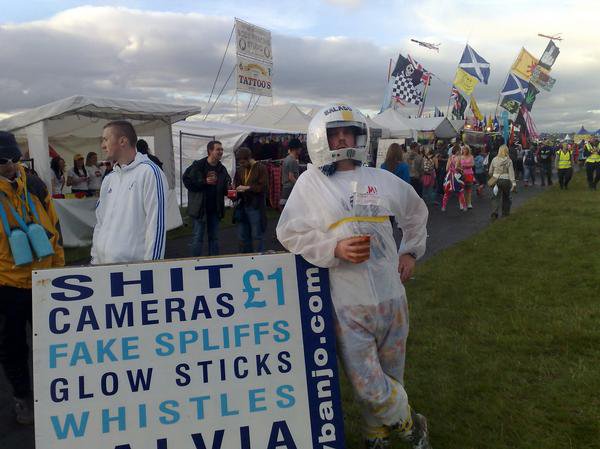
The stall in full chaos mode. This was a normal Wednesday night in the Dance Field.Muddy Glastonbury, around 2000. The neighbours were considerably posher than us.A spaceman. No idea. This was Glastonbury. You just accepted it.Daytime. Every surface covered, every hanger full.
Willy Banjo
Running Preston’s legendary head shop since 1993. Twenty-one Glastonburys in the Dance Field. No wonder I’ve got tinnitus.
Festivals have changed. I’m old. Most of my friends don’t do it anymore. We had the time of our lives. Some people survived. Some didn’t. It’s a shame it went the way it did — none of us really got to say goodbye. Life goes on.
We use cookies on our website to give you the most relevant experience by remembering your preferences and repeat visits. By clicking “Accept All”, you consent to the use of ALL the cookies. However, you may visit "Cookie Settings" to provide a controlled consent.
This website uses cookies to improve your experience while you navigate through the website. Out of these, the cookies that are categorized as necessary are stored on your browser as they are essential for the working of basic functionalities of the website. We also use third-party cookies that help us analyze and understand how you use this website. These cookies will be stored in your browser only with your consent. You also have the option to opt-out of these cookies. But opting out of some of these cookies may affect your browsing experience.
Necessary cookies are absolutely essential for the website to function properly. These cookies ensure basic functionalities and security features of the website, anonymously.
Cookie
Duration
Description
cookielawinfo-checkbox-analytics
11 months
This cookie is set by GDPR Cookie Consent plugin. The cookie is used to store the user consent for the cookies in the category "Analytics".
cookielawinfo-checkbox-functional
11 months
The cookie is set by GDPR cookie consent to record the user consent for the cookies in the category "Functional".
cookielawinfo-checkbox-necessary
11 months
This cookie is set by GDPR Cookie Consent plugin. The cookies is used to store the user consent for the cookies in the category "Necessary".
cookielawinfo-checkbox-others
11 months
This cookie is set by GDPR Cookie Consent plugin. The cookie is used to store the user consent for the cookies in the category "Other.
cookielawinfo-checkbox-performance
11 months
This cookie is set by GDPR Cookie Consent plugin. The cookie is used to store the user consent for the cookies in the category "Performance".
viewed_cookie_policy
11 months
The cookie is set by the GDPR Cookie Consent plugin and is used to store whether or not user has consented to the use of cookies. It does not store any personal data.
Functional cookies help to perform certain functionalities like sharing the content of the website on social media platforms, collect feedbacks, and other third-party features.
Performance cookies are used to understand and analyze the key performance indexes of the website which helps in delivering a better user experience for the visitors.
Analytical cookies are used to understand how visitors interact with the website. These cookies help provide information on metrics the number of visitors, bounce rate, traffic source, etc.
Advertisement cookies are used to provide visitors with relevant ads and marketing campaigns. These cookies track visitors across websites and collect information to provide customized ads.