

Tickets, Tapes and a Wall of Flyers
There was no internet. There was no local radio that played this music — if you were lucky, you could pick up Stu Allen late at night on Key 103 from Manchester, but only if you hung out of your bedroom window with the aerial and hoped for the best.
So how did anyone on the Preston rave scene know what was on?
They came in here.
How the Preston rave hub started
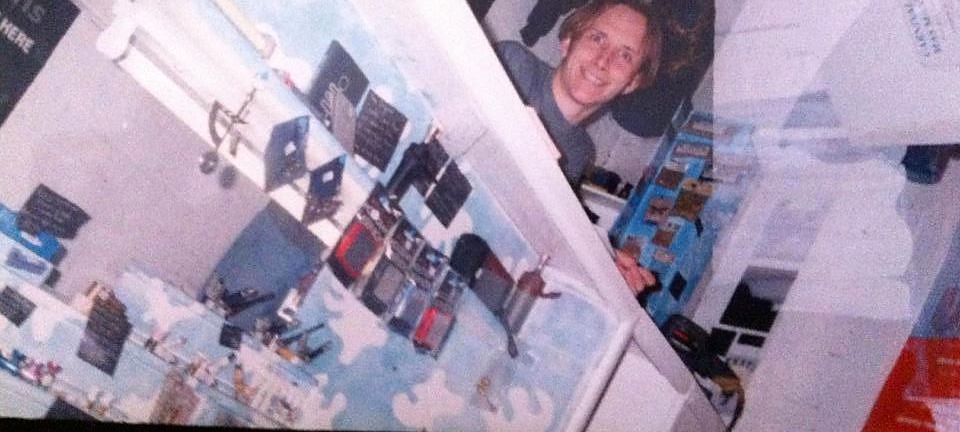
We opened the shop in 1994. By the end of that year we were already selling music.
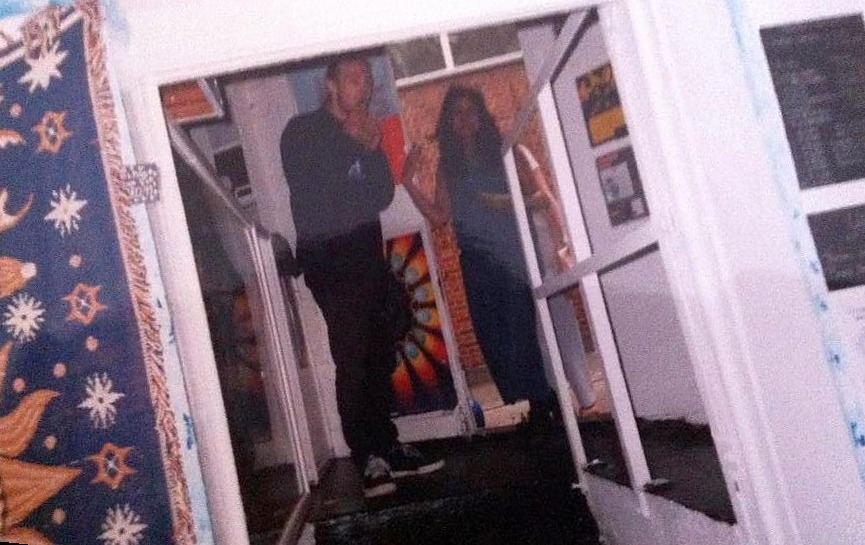
It started through a bloke called Richard — a mate of a mate — who was bringing tapes in from parties. Progress at the Roxy in Leeds. Hot to Trot. Jeremy Healy. The cool nights. We’d sell them. He ended up having us over for about £500 at some point, which is very much part of the story.
After that we started doing it ourselves. If we got a flyer, we’d find out who the promoter was and ring them up: send us your flyers, and if you’re making any music, send us that too. That’s how the whole thing built. By the time it was running properly, we were stocking tapes and tickets for most of the big nationals.
The wall of flyers
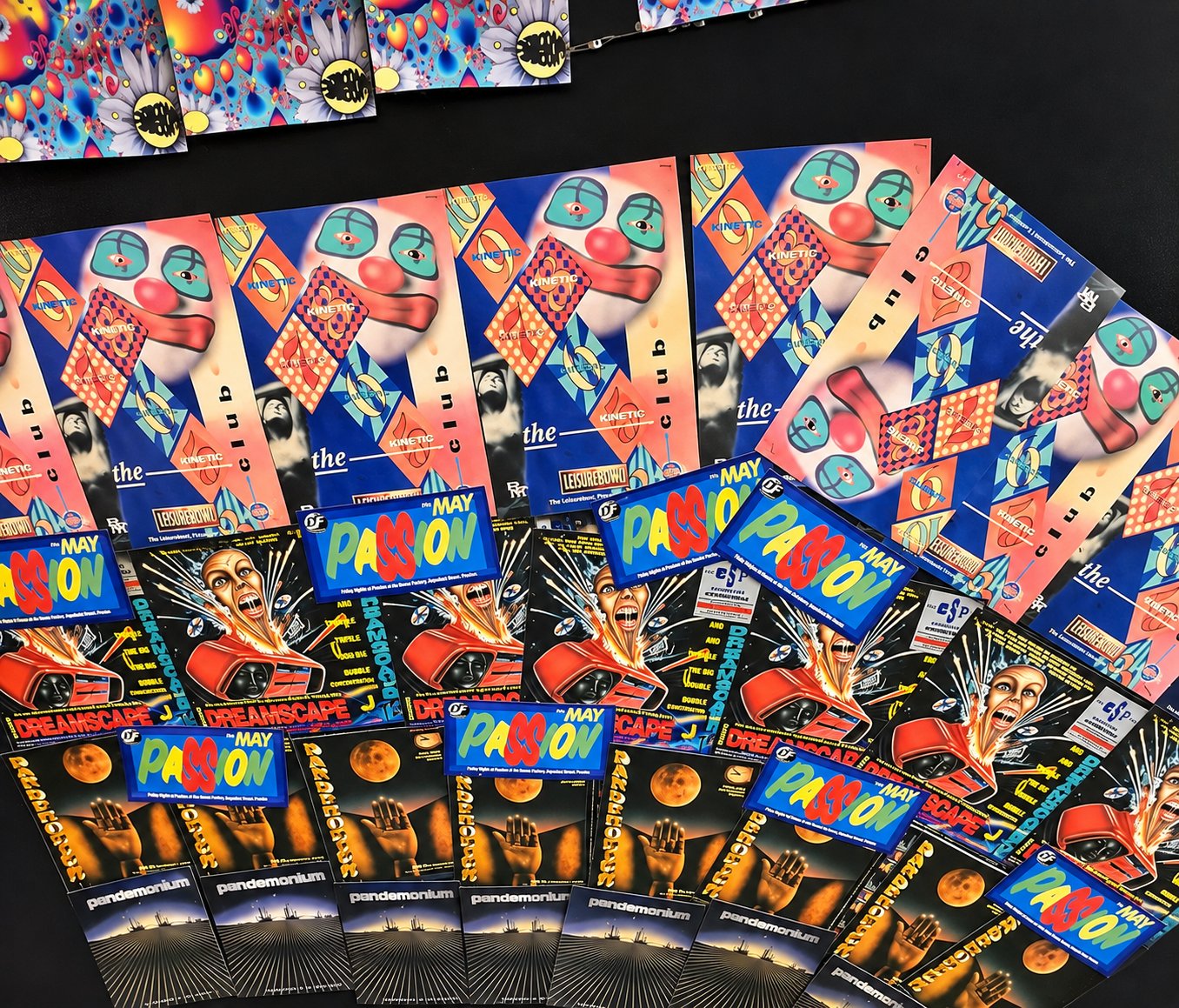
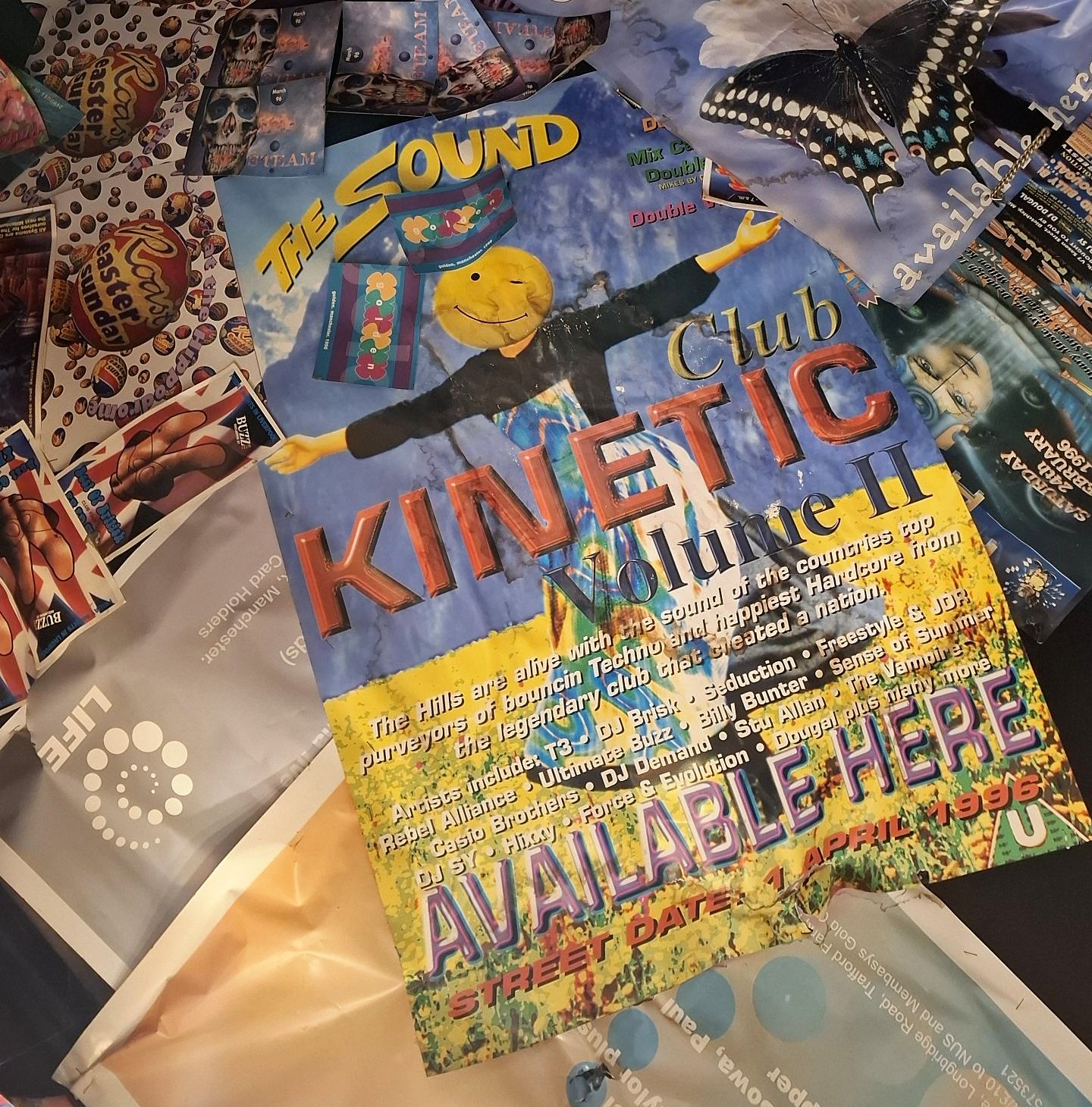
The shop was a wall of flyers. Not some of them — all of them. Every club, every promoter, every night within driving distance ended up on that wall. Kinetic, Dreamscape, Helter Skelter, Slamming Vinyl, Roast, Tomorrow’s World, Vibealite, Hysteria, Fantasy Island, Hardcore Heaven, Life, UK Jungle, Miss Moneypenny’s. If there was a night worth going to, we had the flyer. If there wasn’t a flyer, we probably knew about it anyway.
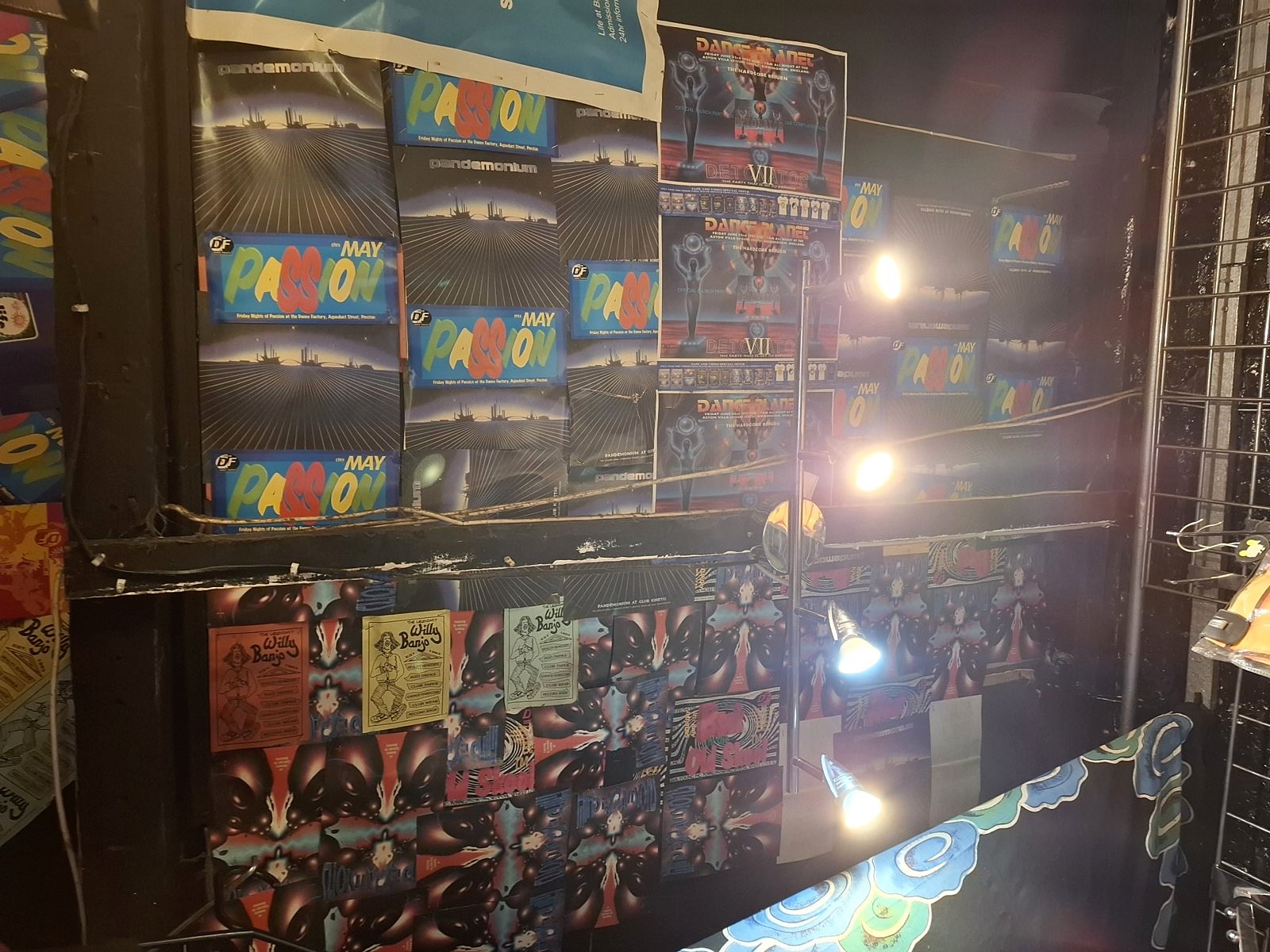
People would come in to collect the flyers. To ask what was on. To ask if anyone had been. Is it safe? Is it worth the drive? What’s the crowd like? We were Google for parties before Google existed. That’s not an exaggeration — there genuinely was no other way to find out unless you knew someone who’d already been, or you read it in a fanzine, or you got lucky with the aerial.
The tickets
We were the official outlet for most of the big ones. Dreamscape, Kinetic, Helter Skelter, Slamming Vinyl, Roast, the garage nights, the bounce nights. Glastonbury too — pre-internet, you couldn’t just go online and buy one. You came in here. If you wanted a ticket in Preston, this was where you came.
Being a ticket outlet was straightforward enough — until it wasn’t. We once owed Helter Skelter £5,000 in ticket money. Cash we’d collected, cash that had disappeared into a particularly rough patch. Dave, who ran Helter Skelter, was a proper old-school fella. He gave us a bit of grief — which he was absolutely entitled to — but when we promised to pay it back at £500 a week, he took us at our word. We paid every penny. No animosity after that. That’s how things worked in that world: people were either proper or they weren’t, and Dave was proper.
The tapes
The other side of it was the recordings.
Clubs would approach us — or we’d approach them — about selling their sets. Carl Cox on a Friday at Kinetic, recorded live. By the following Friday it was in the shop on tape. Up to twelve tapes for a Dreamscape night. We did Slamming Vinyl, Roast, the garage scene, the bounce scene.
It grew fast enough that it took over the whole upstairs. Ferny — Michael Fern, one of our original staff — ran most of that end of things. Good lad, Ferny. Daft as a brush, lovely fella. We lost him years later. Miss him.
The DJs didn’t always love it, apparently. The economics were murky. But the demand was real. If you couldn’t make the night, or you wanted to relive it, there was no other way to hear it. The only way to hear Carl Cox was to go to the club or come in here on a Saturday morning.
We were there before drum and bass existed as a name. We watched hardcore split — happy hardcore one way, darker stuff the other, which turned into jungle. Carl Cox went techno and made a lot of money. Kenny Ken and Grooverider went drum and bass. Slipmatt just stayed Slipmatt — played bangers across every genre, carried on as normal, still going. All of them still going in some form. We watched it happen from behind the counter.
The nights
Kinetic was special. That building went ba ba ba ba ba ba ba — you could feel it in your chest. Hard techno and hardcore room, brilliant house room, both firing. The energy was intense in a way that’s hard to explain if you weren’t there. Very well run club.
Bowlers — Life at Bowlers — was something else. Every nation, every colour, super glamorous girls in one corner and proper little ravers giving it the full beans in the other, everyone singing along to the same music. That’s what it was at its best.
We never went to Cream. We’d arranged to go one night — about twenty of us — and they turned one of the lads away at the door. Not cool enough, apparently. Twenty of us walked out. We’d had enough of that attitude from the 80s, Sharon and Tracy nights where you couldn’t get in because of the colour of your trainers or because your shoes weren’t shiny enough. If that’s how a club was going to run, they could do it without us.
The coaches
We never ran coaches — a van full of ravers felt like a liability we didn’t need — but customers did. There were coaches to Bowlers, to Helter Skelter, to Kinetic.
Coming out of Kinetic one night, we found a Preston coach in the car park. Someone had clearly had an enthusiastic evening and left his motorbike behind. His mates were trying to fit it into the luggage compartment underneath the coach. It wasn’t going in. We said hello, wished them luck, and left them to it.
He came into the shop the following week with a broken shoulder and something else that wasn’t right either. Apparently the motorbike had gone off the road on the way home. He made a full recovery, as far as we know. It’s probably not a story he tells much.
Movers and Shakers Records
Somewhere in the middle of all this, we also had a record shop. Movers and Shakers Records — in what’s now the office, same building. A couple of massive Jamo speakers. A pair of Technics 1210s. A mate called Herbie sorted us a clearance — my Fiat Uno absolutely rammed with his vinyl, on its axles all the way home, didn’t stop too well either. White labels, loads of banging old hardcore.

It was a different business to what we knew how to run. We did alright out of it, but it was too much. There was a business partner involved who proved more interested in the money-out side of things than the money-in side. I ended up buying him out. No animosity. Never to be seen again.
The last of the records went to a mate who still deals in vinyl. I rang him up: I’ve got about six feet of twelve-inches, take them off me for twenty quid. Some of those white labels were probably still current. I couldn’t be bothered going through them. Six feet of vinyl. Twenty quid. Gone.
The clothes
The other thing we stocked that you couldn’t get in Preston without us was the fashion. Cyber Dog, UV gear, slinky hot pants, the outfits you actually needed to look the part — the kind of stuff you’d otherwise have to go to Manchester for. We had it.
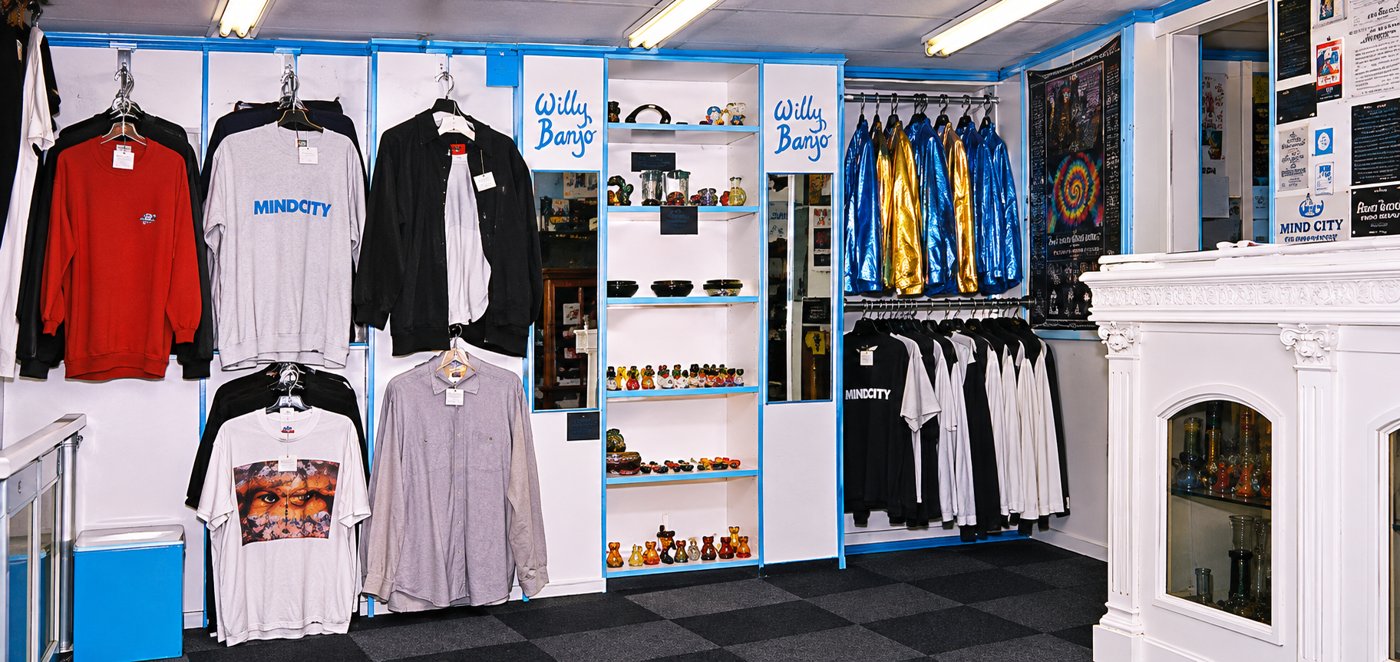
The people making it were small independents, and they were fast. One of our suppliers — who designed and made all their own stuff — explained how it worked. The buyers from Topshop and the big fashion chains would go to Glastonbury, walk the stalls, and lift whatever they saw. Six months later, sometimes more, it’d appear on their rails at scale. Meanwhile our supplier had already done a full season of it and moved on. For a while, the independents were always four months ahead of the high street.
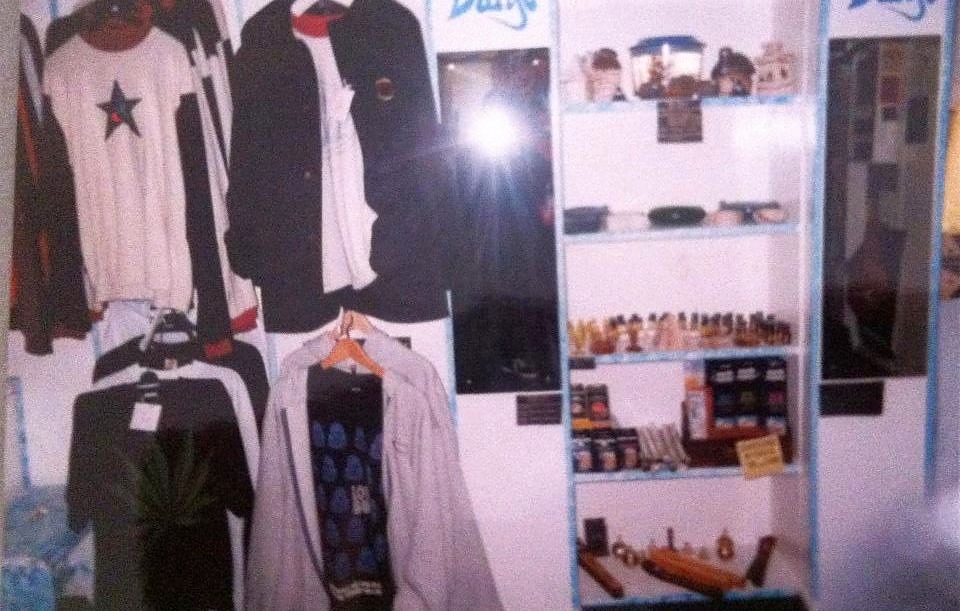
Then the corporates got quicker. Four weeks turnaround, six weeks, getting it on the shelves almost as fast as the people who’d actually invented it. Same story it always is: the independents have the ideas and the speed, the corporates have the scale, and eventually the scale wins.
The end of it
Ticketmaster turned up. Then Apple changed what music meant. Then Spotify finished it off. Suddenly all the tickets were online, all the music was online, and the two things we’d been doing that nobody else in Preston was doing — getting you into the club and getting you the recording — were gone.
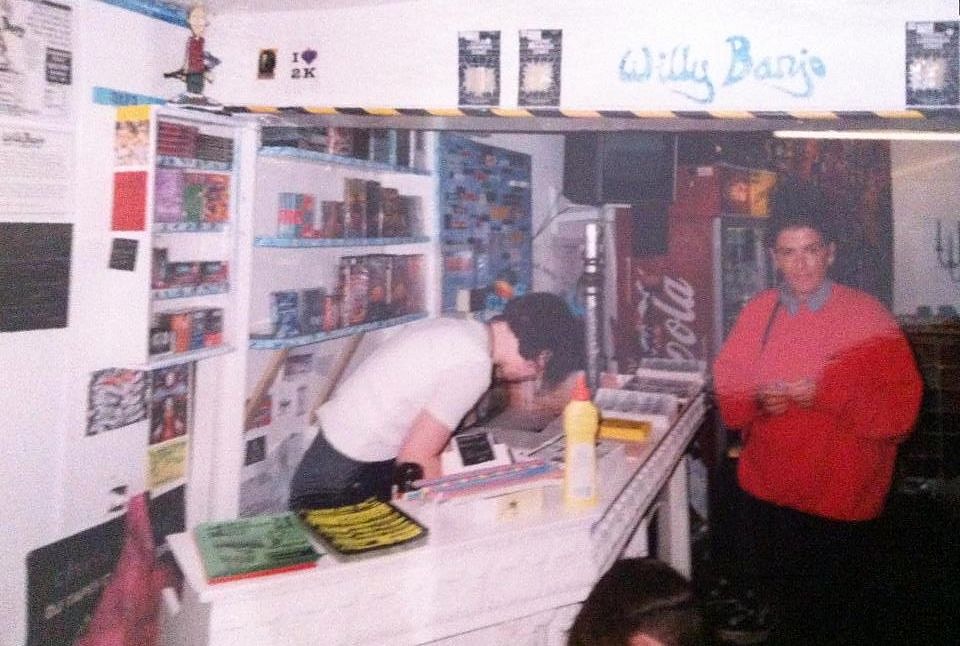
Preston rave nights used to be proper. The university had everyone through — Carl Cox, Sasha, Pete Tong, Judge Jules, legendary free-to-dance nights. The Mill, Green, Base Bar, Squires, Tokyo Joe’s. There was always somewhere to go, always something on. Now there are two clubs left and some late night bars.
Now there are nights going on in this town where the promoters don’t even bother telling us. Which is different. And fair enough, probably, because the world changed and they don’t need to.
But for about ten years, if you wanted to know what was on, where to go, whether it was worth the drive, how to get a ticket, or what Carl Cox sounded like on a Friday at Kinetic — you came down the stairs and asked.
Some people come in now and tell us we’re the reason they got into music. We’ll take that. Still mates with Paul, who did the flyer and merch design back then. That world stays with you.
And it’s gone full circle in ways we didn’t see coming. Kids are coming in now telling us they’ve been to Gabba nights. We were going to a Gabba club that started in North Wales — Steam — then moved to Stoke and became North. Fridays was the gabba night, the day after was a cool house night called Golden. We’d do the merchandise and sell the tapes at the door. Same music. Twenty-eight years later, kids acting like they’ve discovered something new. Fair play to them. We’ve been here the whole time.
More from the Preston rave archive: B.A.S.H. and Baby Bash — the under-18s nights we put on in Preston · 21 Glastonburys as a festival trader · The Willy Banjo Story
Aww.. That’s absolutely fantastic. They should put your face on money. Love u x